
If you’re thinking about traveling to Spain in December, this guide will help you understand how we truly experience Christmas: from the Christmas Lottery on December 22nd to the Three Kings on January 6th.
Traditions, atmosphere, food and cultural experiences from the inside.
I’ll tell you things you won’t find in tourist guides.
December 22: when Christmas really begins
In Spain, Christmas begins on December 22nd with the Sorteo Extraordinario de la Lotería de Navidad (the Christmas Lottery). It’s a very special moment with a unique, unmistakable ritual. Some people watch excitedly, others out of tradition, and others simply for the company. But everyone feels it as the official start of the season.
The lottery is full of stories:
- Families who always buy from the same shop.
- Friends who share a single ticket (décimo, one-tenth of a full ticket).
- Places where people queue for hours — even from the summer — to get a specific number.
- Bars, shops and businesses that share lottery numbers with customers and employees.
This day marks the emotional beginning of Christmas in Spain. From here on, everything changes. The entire country follows the live broadcast of the draw, which starts in the morning. The atmosphere on the streets, in shops and in cafés is unique because this lottery distributes millions of winning tickets. Everywhere, a radio or TV is playing the voices of the schoolchildren who sing the numbers as they come out of the drums.
Those voices become a kind of melody that fills the streets, cafés and shops. And from time to time, you hear joyful shouts from people who — often with tears in their eyes — find out their number has won.
December 24: Christmas Eve, the most family-centered night
For many families, Christmas Eve is the most important moment of the year. There’s a strong tradition of home cooking because mothers and grandmothers have passed their recipes down for generations.
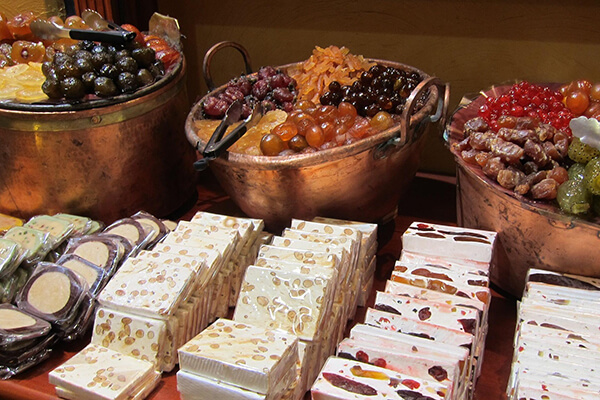
From early morning, homes smell of food: broths, oven-baked fish, lamb, suckling pig, seafood, homemade desserts, turrón, marzipan, polvorones…
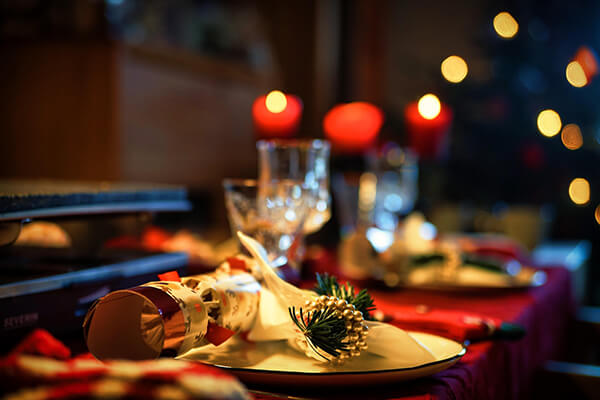
Dinner usually begins late: between 9:00 p.m. and 10:00 p.m. Before dinner, people sing villancicos (traditional Christmas carols). It doesn’t matter if you sing well or poorly — what matters is singing with joy and the desire to celebrate
Then comes a deeply Spanish tradition: la sobremesa.
What is la sobremesa?
That magical time after eating when nobody gets up; people talk, laugh, remember stories and share moments without any rush. A sobremesa can last one hour… or three. For many foreigners, this is the moment when they truly understand the Spanish character: talkative, warm, family-oriented, fun — and of course, full of lively discussions about life. Carols, card games, the Spanish deck and trays of sweets complete the evening.
December 25: a calm, bright day
Christmas Day in Spain is quieter than Christmas Eve. It’s a public holiday, which means everything is closed, and we stay home to enjoy the calm.
Families have lunch together around 2:30 or 3:00 p.m., take short walks, call friends to wish them a Merry Christmas, watch movies, and play board games. Some families open gifts if they celebrate Father Christmas, but most save the important presents for January 6th, Three Kings’ Day.
December 28: Day of the Holy Innocents (our April Fool’s Day)
This day is dedicated to jokes, known as inocentadas. Its origin relates to the Christian remembrance of the innocent children killed on Herod’s orders.
Those who fall for a joke are considered “innocent” because they don’t realize it’s fake until the end.
It’s common to see:
- family pranks,
- fake news on TV,
- humorous headlines,
- small, playful tricks.
If you’re in Spain on this day, someone might prank you.
And if you fall for it, they’ll say:
“¡Inocente, inocente, inocente!”
It’s gentle, friendly Spanish humor.
December 31: New Year’s Eve and the 12 grapes
One of the most surprising traditions for foreigners is eating the 12 lucky grapes. At midnight, with each chime of the bell, almost the entire country eats one grape per chime — making wishes or simply trying not to choke.
Then come the toasts, cava, hugs, laughter and, for many, parties that last until dawn.
A very Spanish detail:
life on the streets after midnight. People go outside en masse after eating the grapes at home.
The streets fill with cars, groups of friends, movement — even traffic jams at 1:00 a.m.!
If you spend New Year’s Eve in Spain, you’ll enjoy a lively atmosphere outdoors.
January 1: New Year’s Day, a day of total calm
The first day of the year is peaceful. Shops are closed, people rest, families eat together again and the streets are unusually quiet. A day to walk, breathe and begin the year softly.
January 5: the Three Kings Parade, magic in the streets
The evening of January 5th is pure magic. Thousands of people go out to watch the Cabalgata de Reyes Magos: a parade of illuminated floats filled with music and candy.
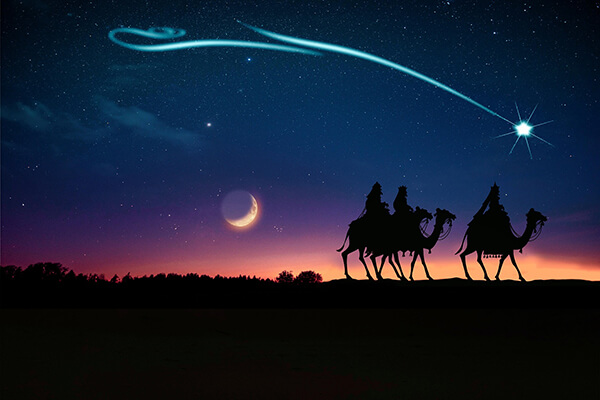
Children wait in total excitement — and so do adults. It’s emotional and symbolic. That night, children leave water for the camels and sweets for the Kings beside the Christmas tree or nativity scene.
The air is full of excitement as everyone waits for Melchior, Gaspar and Balthazar to visit their homes.
January 6: Three Kings’ Day and the roscón breakfast
January 6th is one of the most special days of the Spanish Christmas season. In the morning, children open the gifts brought by the Three Kings. Then comes a delicious ritual: the Roscón de Reyes.
Inside the roscón there are two surprises:
- a small figure → whoever finds it becomes “the king” or “the queen” of the day
- a bean → whoever finds it pays for next year’s roscón
It’s a fun, family-friendly tradition full of gatherings where everyone shows their gifts.
Spanish Christmas food: more than dishes — a social experience
Besides the typical sweets like turrón, marzipan and polvorones, the Christmas menu usually includes:
- broths and consommés,
- seafood,
- oven-baked fish,
- lamb and suckling pig,
- cured meats,
- candied fruit,
- cava and special wines.
But the most important thing isn’t the food itself:
it’s the time shared around the table.
Eating slowly, telling stories, celebrating life…
That’s what fascinates my students the most.
🧡 What surprises foreigners the most
I’ve taught Spanish to many people who spent December in Spain, and they always tell me the same:
- The importance of family.The emotional center of Christmas.
- Social life, even in the cold. Bars, squares, streets, lights… there’s always atmosphere.
- Naturalness and spontaneity. Toasts, songs, long after-dinner conversations, humor, improvisation.
For many, experiencing this time from within is transformative.
Tips if you’re spending Christmas in Spain
- Don’t rush: Christmas here is lived slowly.
- Enjoy the sobremesas — they’re magical.
- Try the sweets (all of them 😄).
- If you’re here on January 5th, don’t miss the parade.
- And especially: let yourself be carried by the light of the cities.
FAQ about Christmas in Spain:
- When does Christmas really begin in Spain?
On December 22nd. - What is celebrated on December 22nd?
The Christmas lottery draw. - What is Christmas Eve dinner like in Spain?
A family dinner at home. - Why do Spaniards eat 12 grapes on New Year’s Eve?
Because it’s a tradition to make 12 wishes. - When do children receive gifts in Spain?
On January 6th. - What is the Three Kings Parade?
A parade featuring the three Wise Men from the East.
Want to experience these traditions from the inside and improve your Spanish?
A beautiful way to get to know Spain is through a week of language immersion in Toledo.
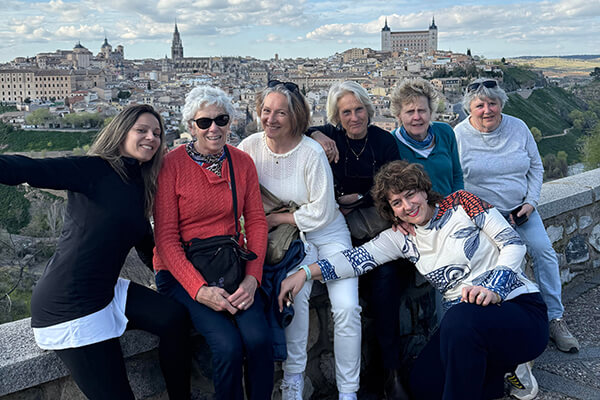
You can see all dates and options here:
👉 https://martacamina.com/en/spanish-immersion-trips/
During one week, at different times throughout the year:
- you’ll practice Spanish in real-life situations,
- you’ll live in a real Spanish home,
- you’ll experience local traditions,
- you’ll discover historic corners,
- you’ll learn as you walk and talk,
- and you’ll feel part of Spanish life.




0 Comments